The Photonics Rotation
The FOMO sector of AI Infrastructure

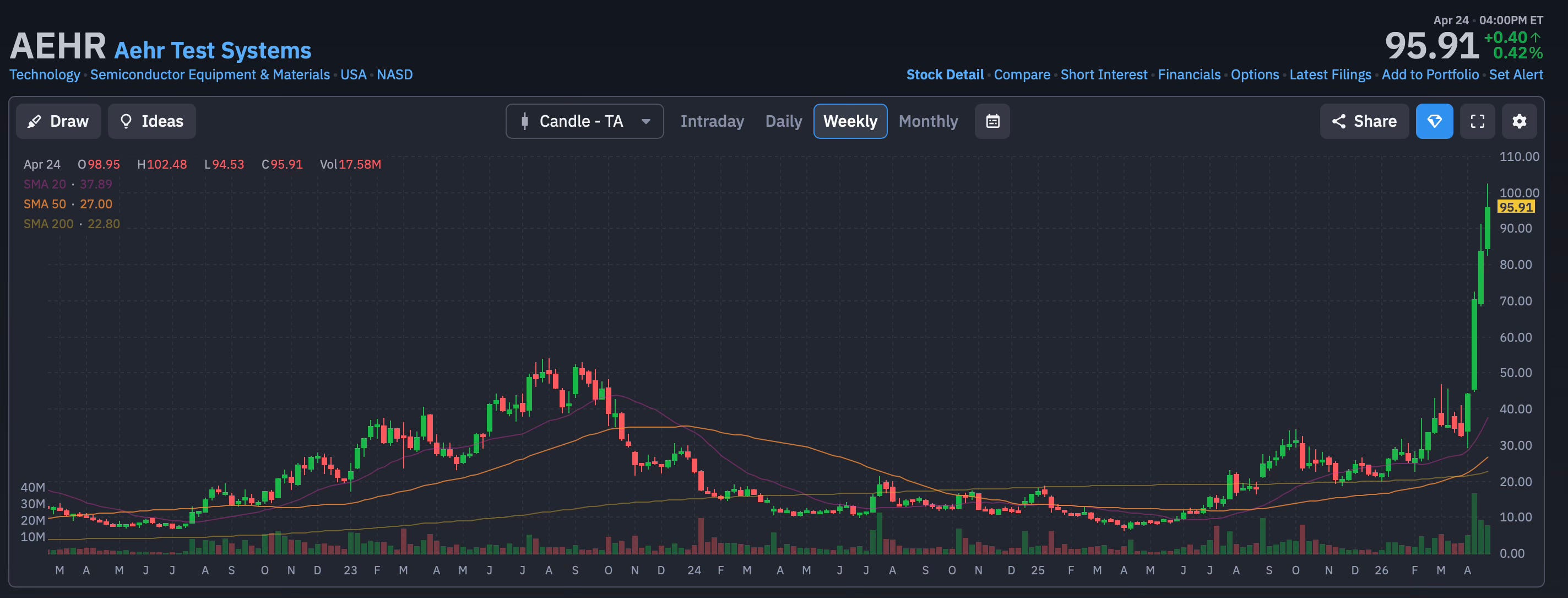
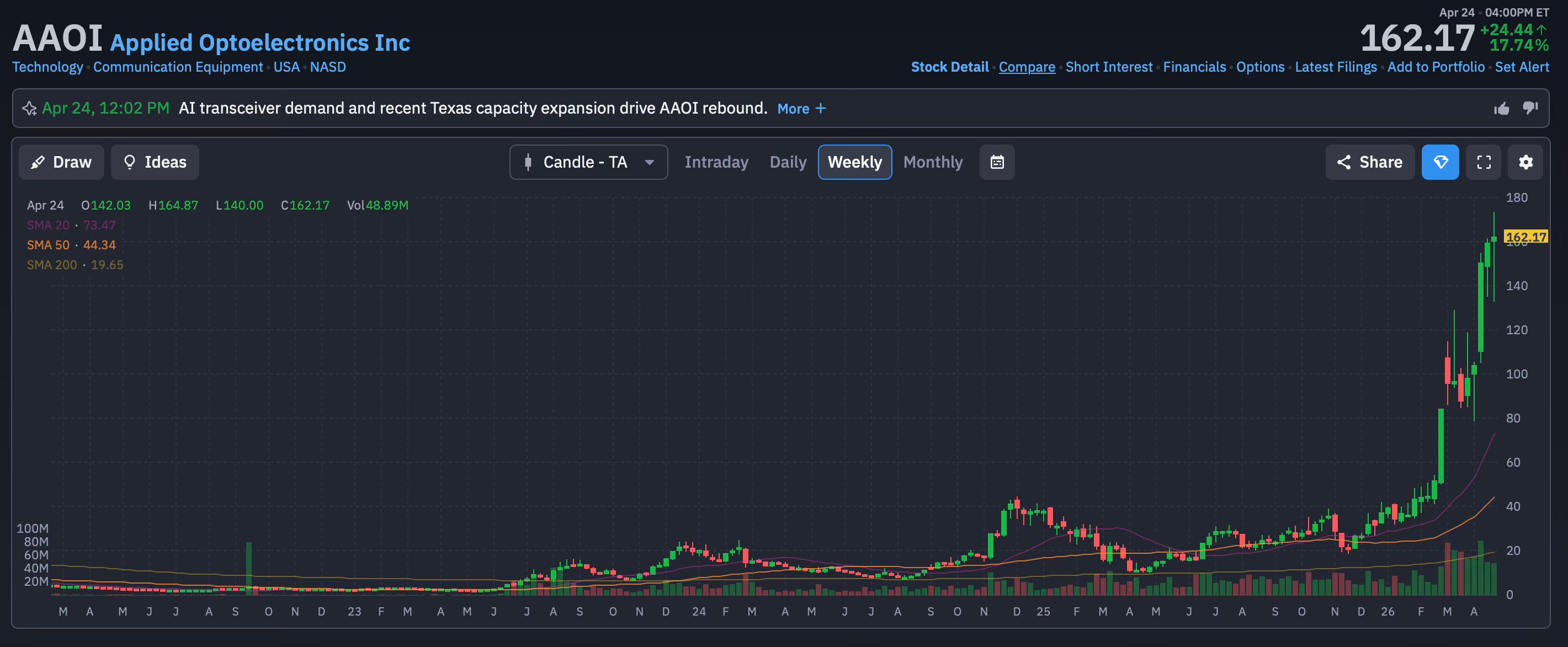
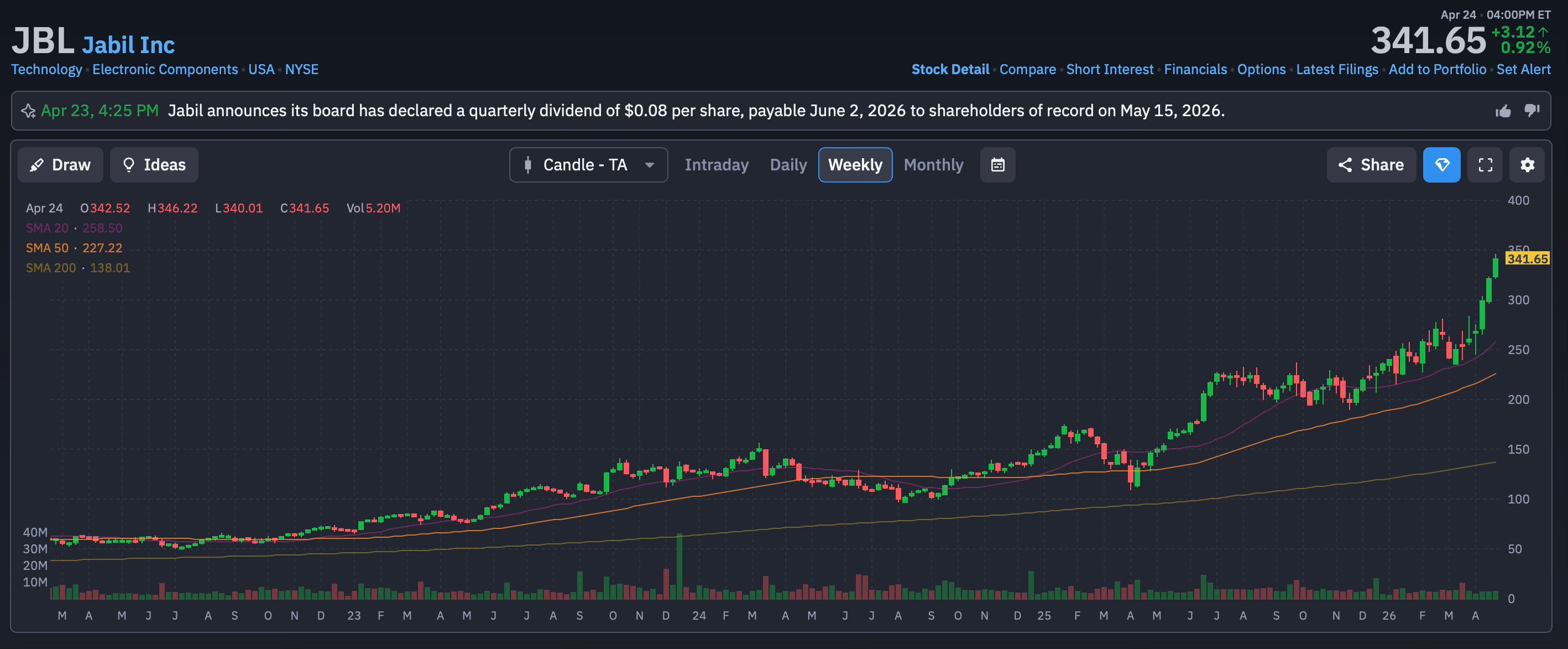
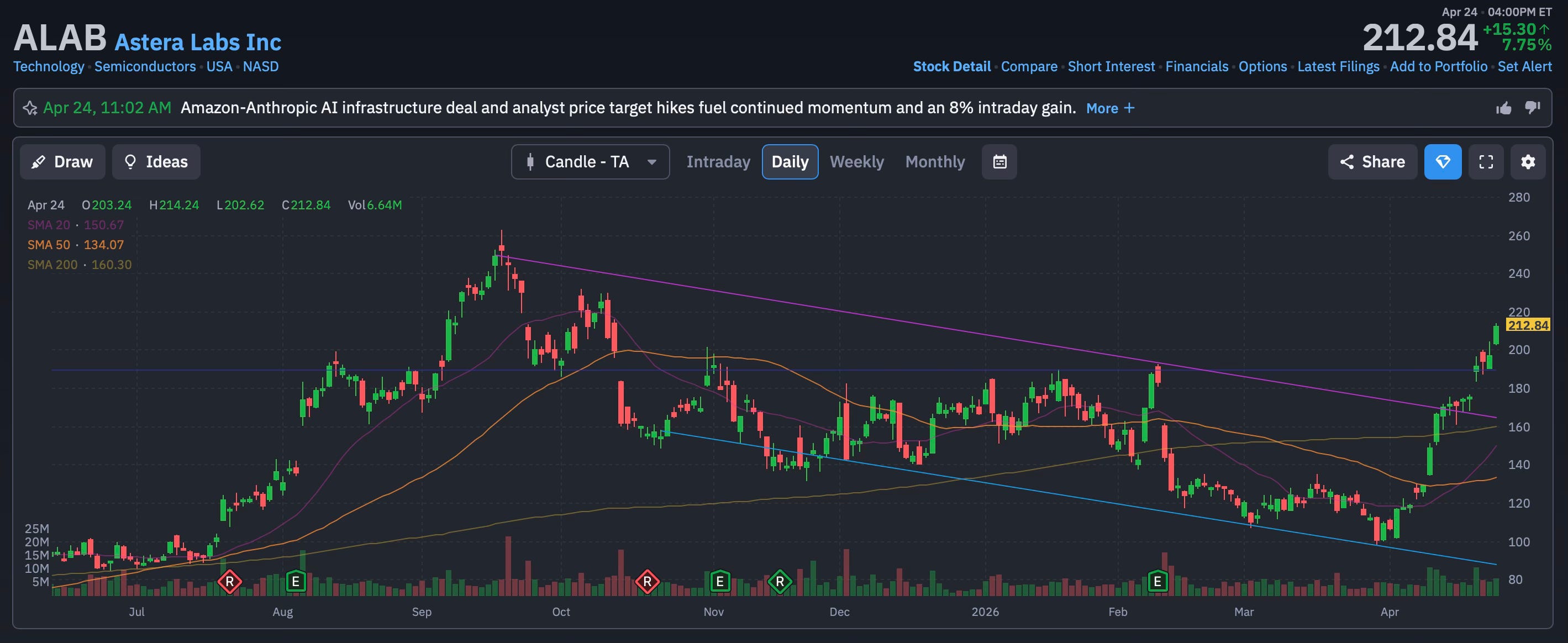
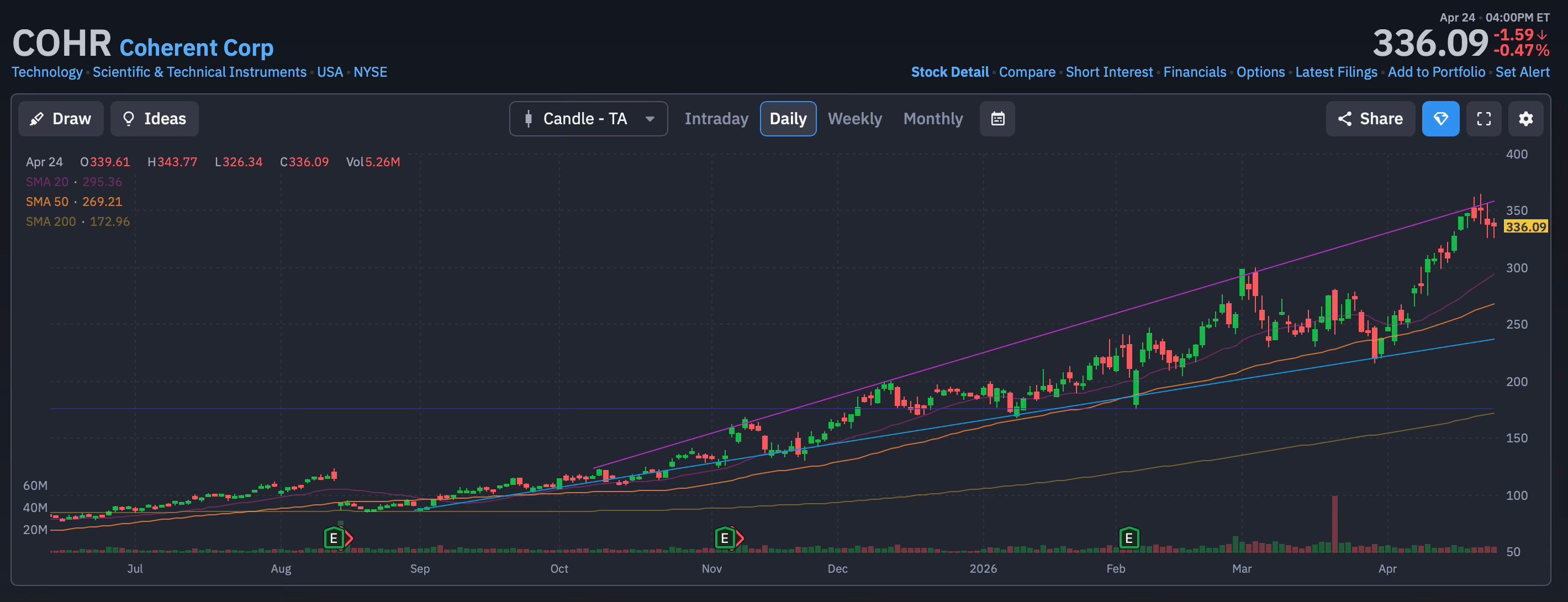
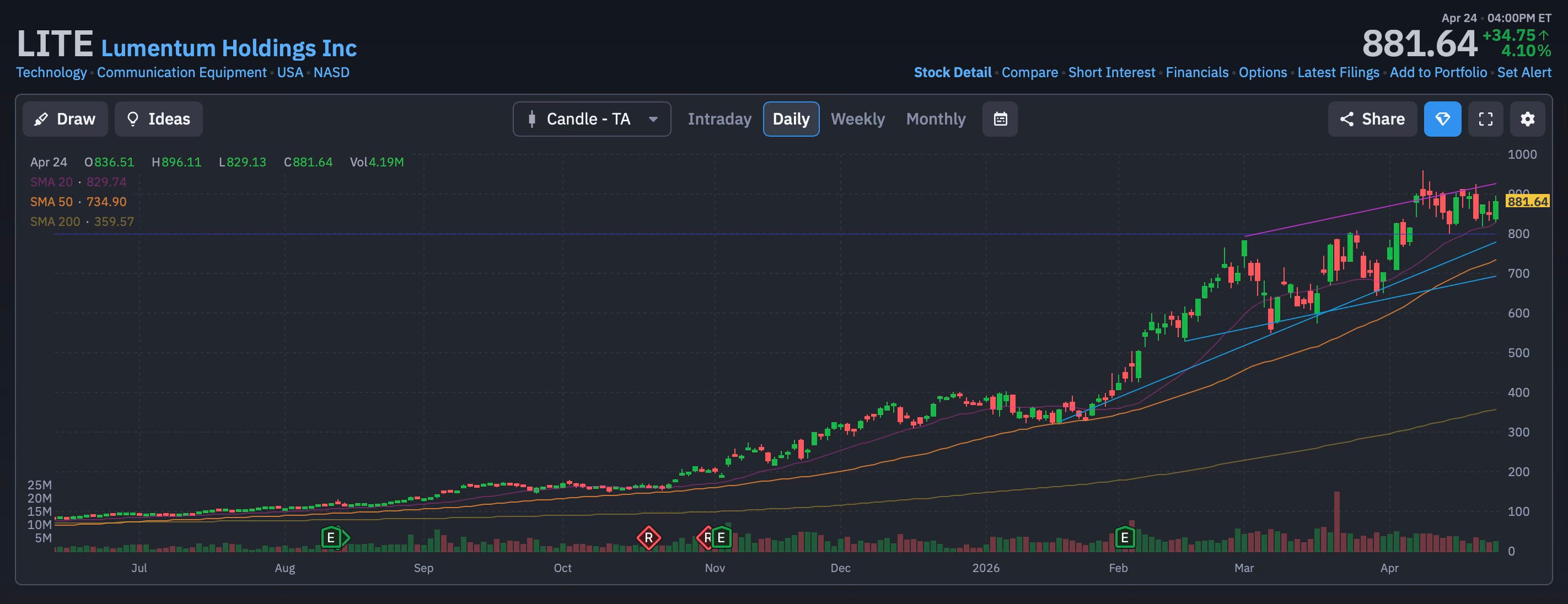
The market has spent the last two years obsessing over GPUs, power, data centers, nuclear, cooling, and the companies building the obvious layers of the AI stack. That made sense. The first phase of the AI trade was about raw compute. If you are anything like me you are feeling some FOMO seeing names like LITE 0.00%↑ , AEHR 0.00%↑ , and COHR 0.00%↑ go completely parabolic with you on the sideline, so lets take a look at my Photonic basket, including the not so far gone names.
But as AI clusters scale, the bottleneck starts to move.
At a certain point, it is not just about how many accelerators you can buy. It is about how quickly those chips can talk to each other. It is about bandwidth, latency, power consumption, heat, and the physical limits of moving data through copper.
That is where photonics comes in.
AI infrastructure is becoming an interconnect problem. The larger the cluster, the more important the network. The more distributed the workload, the more valuable optical connectivity becomes. Copper still matters, especially for short-reach links, but the direction of travel is clear: more bandwidth, more optical modules, more fiber, more lasers, more switching, more testing, and eventually more integrated photonics.
Here are some names positioned across that stack, ordered from smaller market cap to larger.
1. Q/C Technologies, QCLS 0.00%↑
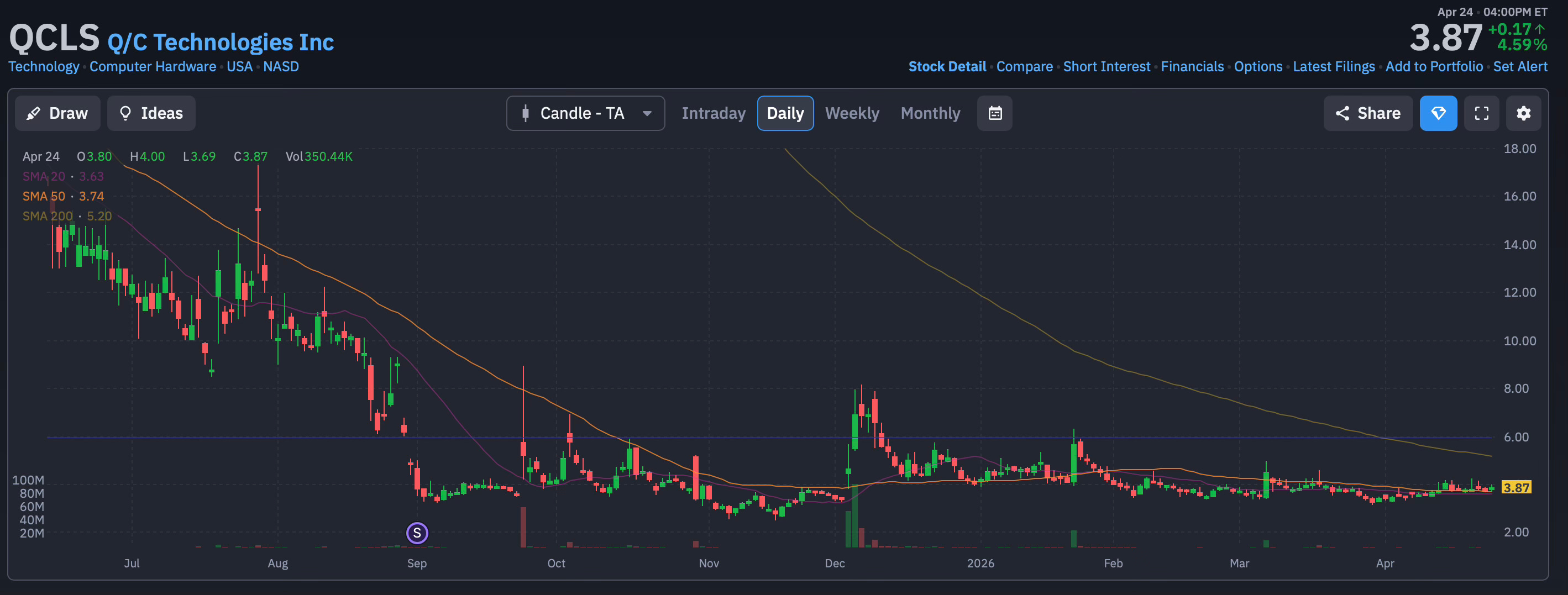
Q/C Technologies is one of the most speculative names on this list.
The company has shifted its story toward quantum-class, laser-based computing infrastructure, which gives it a photonics-adjacent angle rather than the cleaner optical networking exposure found elsewhere in the group. That distinction matters. This is not a mature optical components supplier. It is more of a high-risk, early-stage bet on whether laser-based compute architectures can become commercially relevant.
That makes $QCLS a long-shot name in the rotation. It belongs in the conversation only for investors specifically looking for the smallest, highest-volatility end of the photonics and light-based computing spectrum. Recent public market data places its market cap around the tens of millions, making it the smallest company in this basket.
2. LightPath Technologies, LPTH 0.00%↑
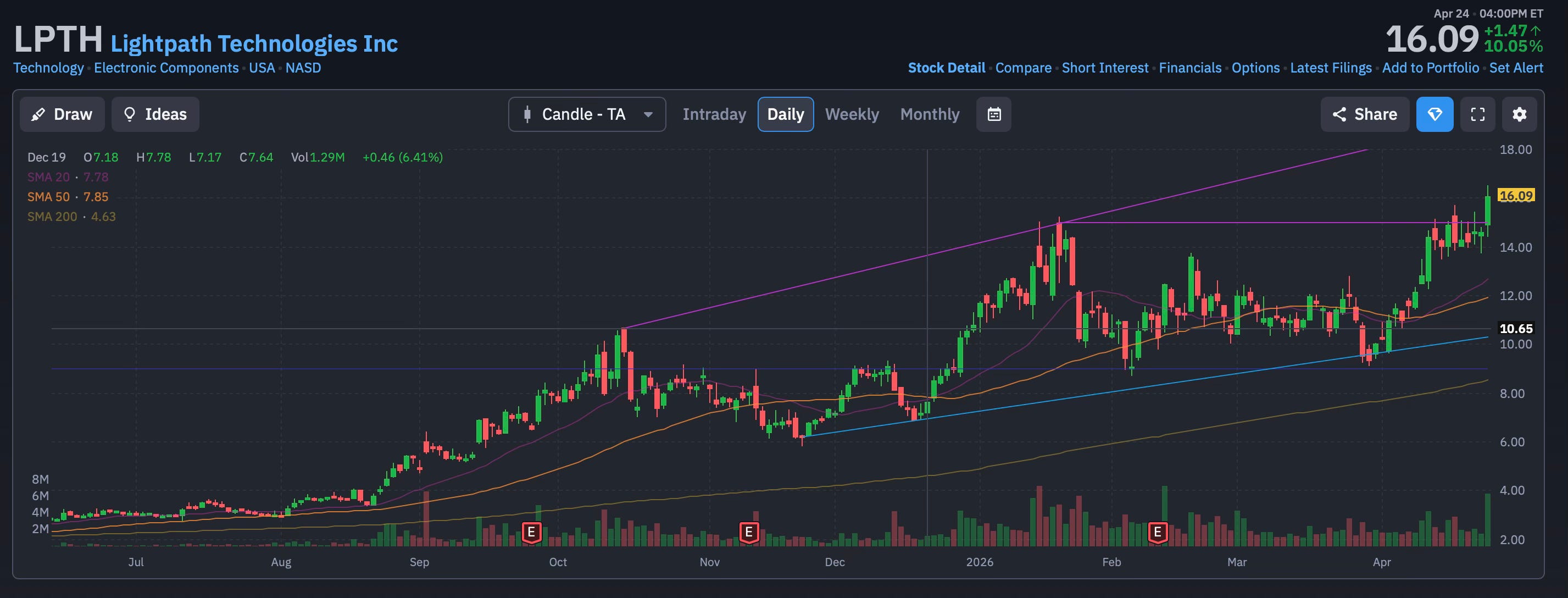
LightPath Technologies sits closer to the specialty optics side of the trade.
The company provides optical components and assemblies used across industrial, defense, medical, and advanced technology markets. In an AI infrastructure context, $LPTH is not a direct hyperscale transceiver pure play. The appeal is broader: precision optics become more important as imaging, sensing, laser systems, and photonic hardware proliferate.
This is a small-cap way to play the idea that the photonics supply chain will broaden beyond the most obvious data-center winners.
3. POET Technologies, POET 0.00%↑
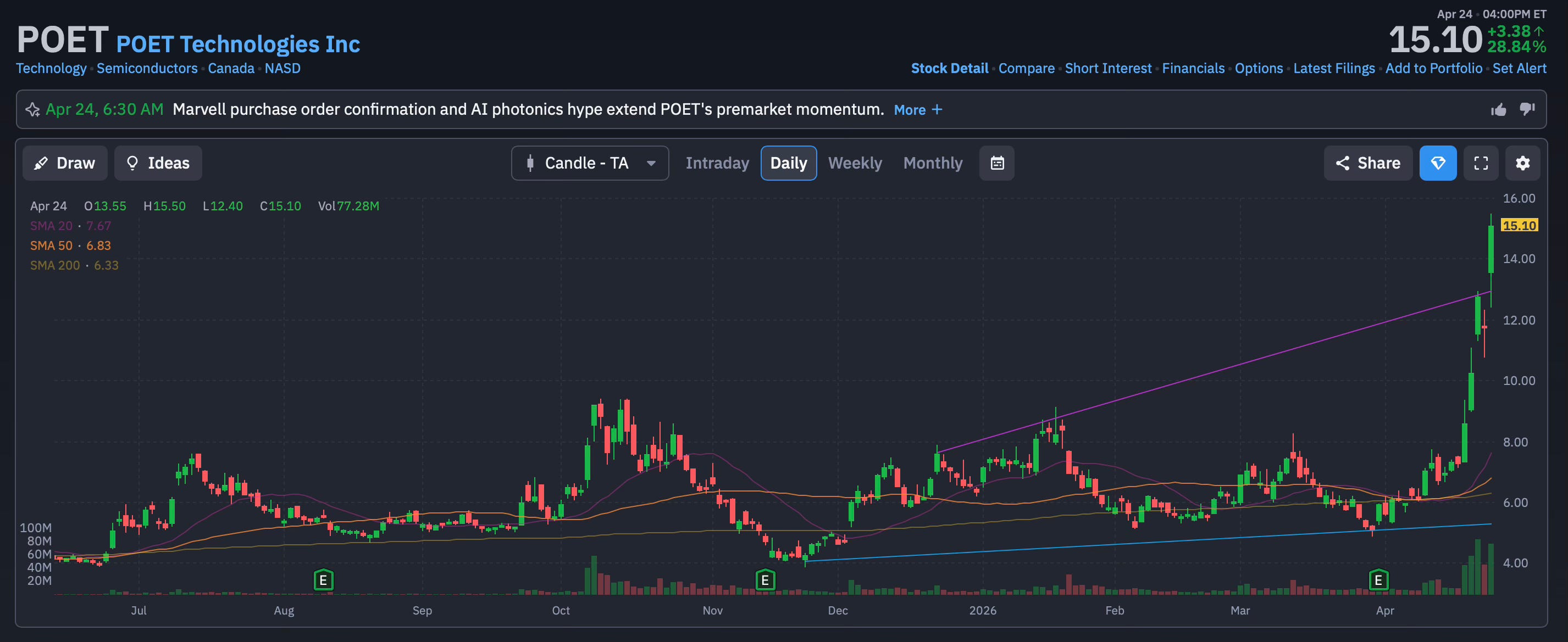
POET is focused on optical engines and photonic integration.
The company’s pitch is simple: as data centers move toward faster optical interconnects, the industry needs lower-cost, lower-power ways to integrate optical functions. That is especially important as AI clusters migrate from 800G toward 1.6T and beyond.
POET is still a speculative name, but it is much more directly tied to AI data-center photonics than many small-cap “AI infrastructure” stories. The bull case is that optical engines become a key building block inside next-generation data centers, and that integration matters as much as raw bandwidth.
4. Lightwave Logic, LWLG 0.00%↑
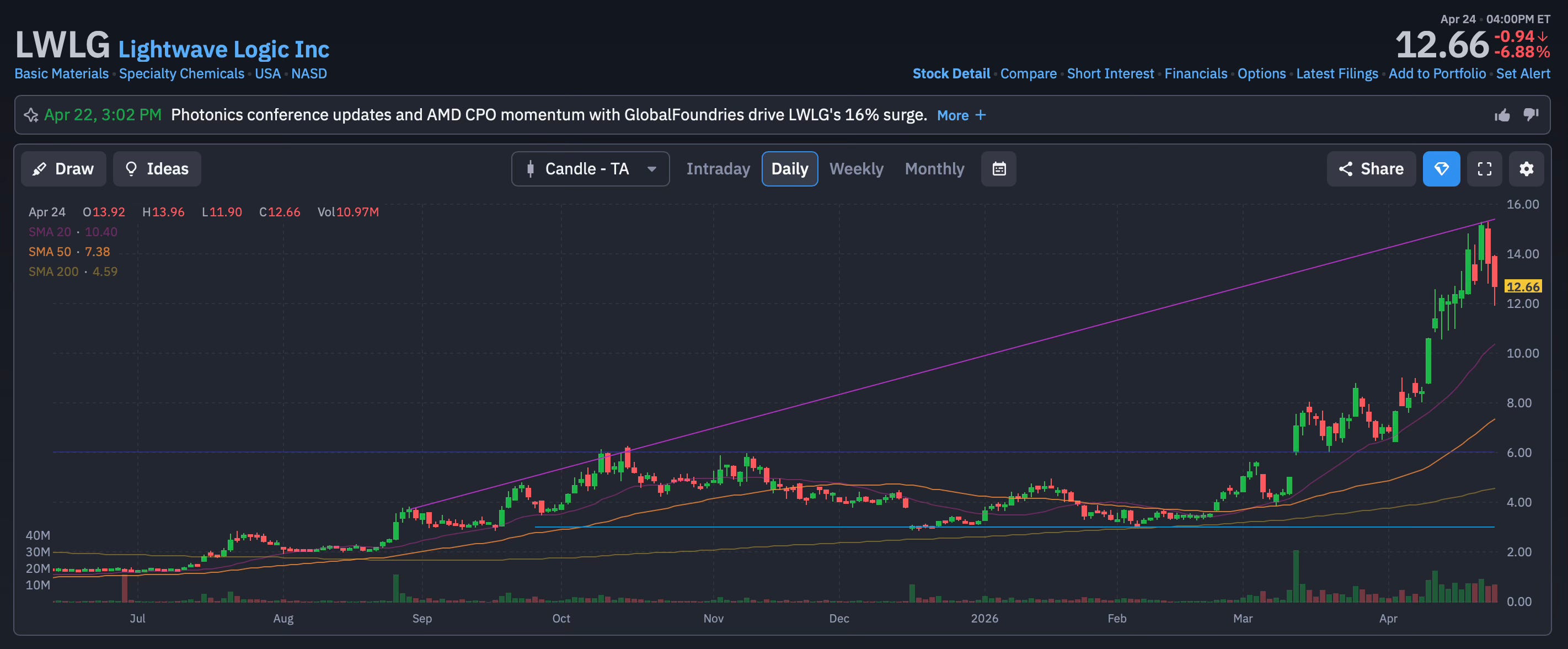
Lightwave Logic is one of the more debated names in photonics.
The company is developing polymer-based electro-optic materials designed to improve the speed and efficiency of optical communications. In plain English, $LWLG is trying to help optical systems move data faster while using less power.
That makes the story highly relevant to AI infrastructure, but also highly dependent on commercialization. The technology is exciting. The market will want proof. For investors, $LWLG is not just a photonics trade. It is a question of whether polymer photonics can move from promise to adoption.
The rest of the names below are larger market caps that have technically ran more than what I would like before I take a position, but nonetheless are worth mentioning and keeping them in your radar, as these are the current leaders in the photonic race. These below are also in order from smallest market cap to largest.