
VOLUME - THE STORY TELLER
Volume Is the Truth Serum of Technical Analysis

In this article i try my best to give traders a better understanding about volume. I reference the book “Volume Price Analysis” by the great Anna Coulling. You should find her on X and give her a follow.
Most new traders learn to watch candles, support and resistance, and maybe a few indicators. But many still miss one of the most important pieces of information on the chart: volume.
Price can rise on excitement, headlines, low liquidity, or short-term emotion. But volume tells you whether there was real participation behind that move. In Anna Coulling’s Volume Price Analysis framework, that is the whole point: not just watching price move, but asking whether volume confirms the move or exposes it as weak, manipulated, or exhausted.
Price shows the move. Volume shows the conviction.
One of the biggest mistakes newer traders make is treating volume like a secondary indicator. They focus on the candle, the breakout, the trendline, or the moving average, and volume becomes something they glance at only after they have already made up their mind.
That is backwards.
Volume is not background information. It is one of the clearest ways to judge whether a move has real participation behind it.
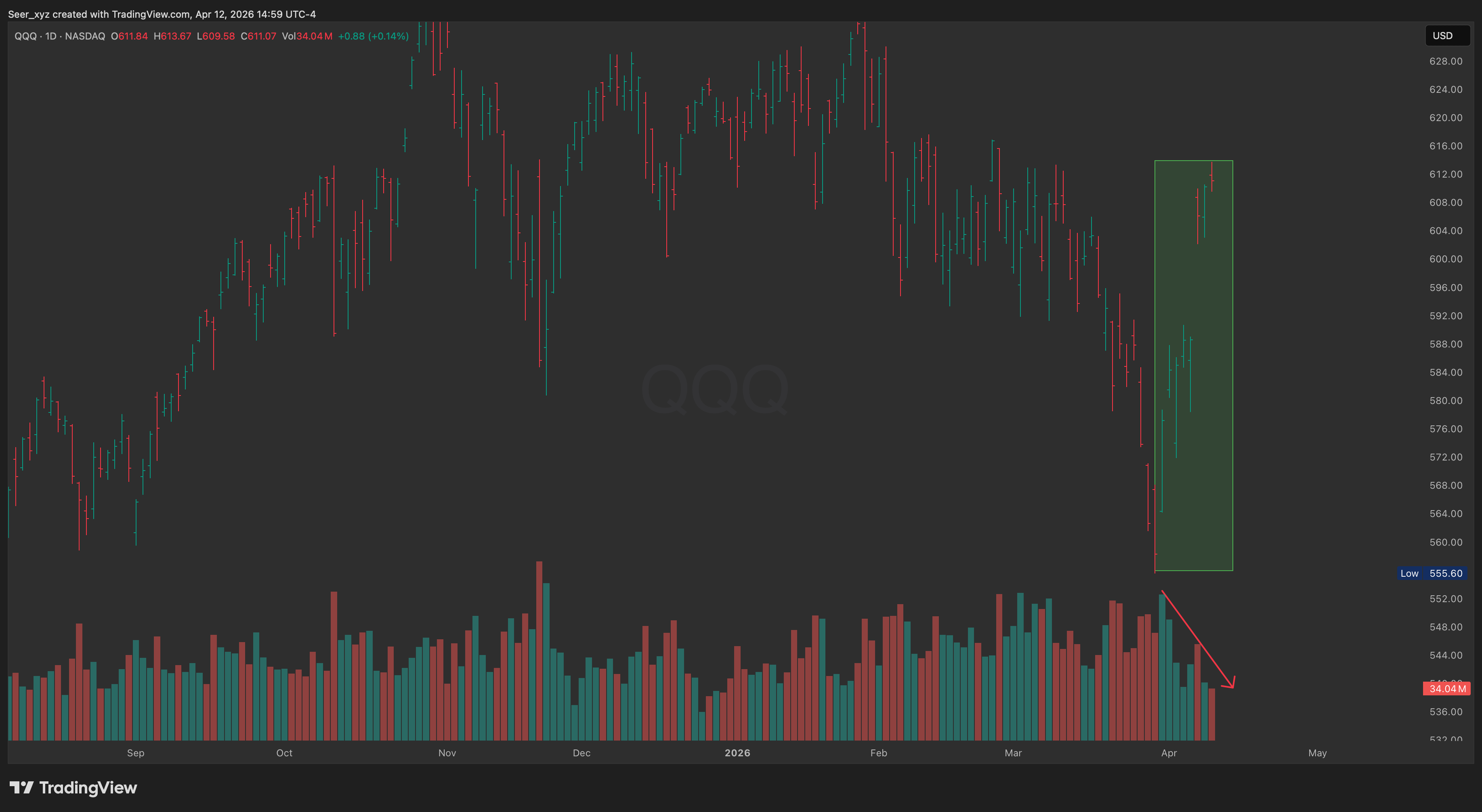
In Anna Coulling’s Volume Price Analysis, the core idea is simple: read price and volume together, not separately. The market is constantly showing us a relationship between effort and result. Price is the result. Volume is the effort. When those two are aligned, the message is clearer. When they are not, the market is warning you that something is off. “Someone is lying”.
For newer traders, this changes everything.
A candle by itself can be deceptive. A breakout can look powerful. A rally can look healthy. A selloff can look terrifying. But without volume, you are missing the context that helps explain whether the move is genuine, weakening, or potentially a trap. Coulling describes this as the difference between confirmation and anomaly. A strong price move with the “right” volume is confirmation. A strong move with strangely weak volume, or a small move with unusually high volume, is an anomaly — and anomalies matter because they often appear before reversals, congestion, or failed breakouts. Think of the chart as a blank canvas, algorithms can make a chart look however they want, they can picture a perfect bullflag before pulling the rug, they can paint a perfect bearflag before ripping your face off. However, the real truth lies in the volume behind any pattern, you need to ALWAYS verify the volume trend fits the pattern in the chart.
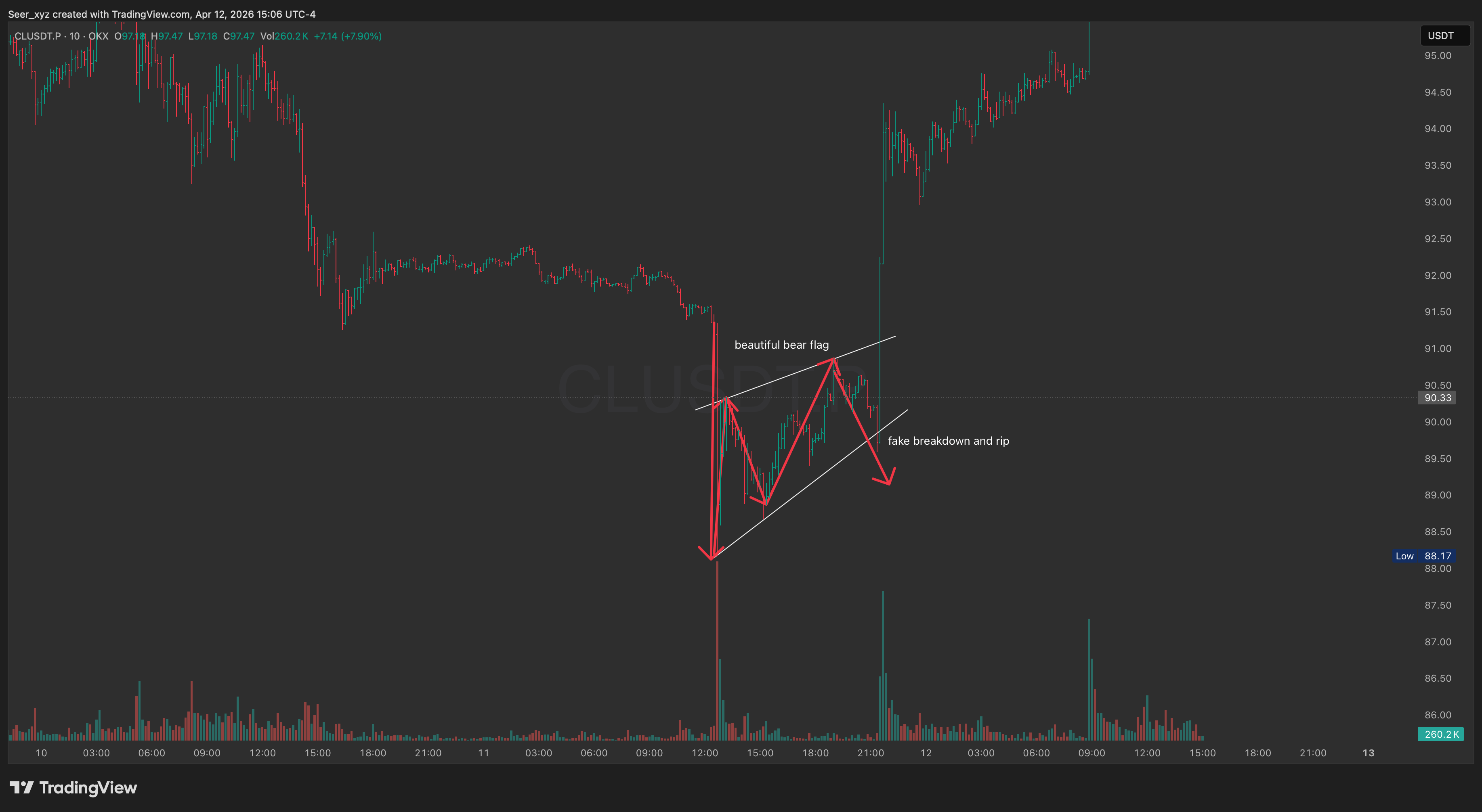
That is why volume matters so much.
Imagine a stock pushing higher on a wide bullish candle. A newer trader may see momentum and feel pressure to chase. But the better question is: how much effort did it take to produce that result? If the candle is wide and volume is also strong, that suggests genuine participation. If the candle is wide but volume is average or weak, the move becomes harder to trust. Coulling argues that a market should require effort to move decisively. If the result is large but the effort is not, that mismatch is a warning sign.
The reverse is also true.
Sometimes you will see very high volume, but price goes nowhere or only moves a little. New traders often ignore this because the chart looks quiet. But this can be one of the most important signals on the screen. If the market is expending a lot of effort and producing very little result, that tells you there is serious opposing activity on the other side. In Coulling’s language, this can signal stopping volume or topping volume depending on context, the possibility that larger players are absorbing the move rather than participating in it. This is what im referring when you see my posts on X mentioning “this level is getting soaked”, what that means is even though we are trading massive volume at a certain level the price is not moving, meaning the opposite side of the tape is “soaking” that volume.
This is where volume becomes less about prediction and more about interpretation.
Volume helps answer questions like:
Is this breakout likely to hold?
Is this trend still healthy?
Is this move running out of steam?
Are buyers really in control, or does it only look that way on price alone?
Coulling also points out a few practical principles that are especially useful for beginners: rising volume generally suggests rising interest, falling volume suggests declining interest, extreme or climax volume can mark reversals, and high-volume zones often become important support or resistance. Volume can also help validate or reject breakouts and sudden spikes.
That last point is huge.
Newer traders get trapped all the time by false breakouts. A stock pushes above resistance, everyone gets excited, and then it rolls over. One of the reasons this happens is that traders are watching the level, but not the participation. A breakout without convincing volume is often just a move on the chart. A breakout with strong, expanding volume has a better claim to being real. Volume does not guarantee success, but it helps you separate stronger moves from weaker ones.
Another important lesson for beginners is that volume should always be read in context.
There is no magic number that means “bullish” or “bearish.” Volume is relative. Coulling notes that what matters is comparing one candle’s effort and result with what came before. The same amount of volume may be normal in one part of a chart and abnormal in another. The question is not “is volume high?” in isolation. The question is “does this volume make sense for this candle, in this location, after what the market has already been doing?” Volume is always relative.
If I had to reduce volume into one lesson for beginners, it would be this:
Price is the headline. Volume is the truth test.
A move with price alone can mislead you, like i’ve said, charts are very easy to manipulate by high freq trading algos. A move with price and volume together gives you a much better read on supply, demand, conviction, exhaustion, and risk.
That does not mean volume is perfect. It does not remove uncertainty. It does not mean every anomaly leads to a reversal or every high-volume breakout becomes a trend. But it does mean you are reading the chart with more depth than the average beginner.
And that edge matters.
Because in trading, the goal is not just to notice movement. The goal is to understand which movement deserves your attention.
Nice work, subscribed. What's your favorite TV indicator for EVR (RedK EVEREX 3.0 on weekly)?